This class connects to my professional goals in many ways. Being a teacher I will run into many children coming from different ethnicities and backgrounds. It is important for me to have diverse literature in my classroom and know what books are good representations of each culture. Not every book is going to be perfect, I know, but there are definitely some that are better than others. I can use information from this class to evaluate literature. I am also more aware of certain things in books and am able to pick up on certain stereotypes and assumptions that may be put in books whereas before this class I was not able to do so as well.
Issues of diversity play a large role in literacy teaching and learning. They are almost always incorporated in children’s reading in one way or another. I think it is important for children to learn about diverse issues and be able to read and write about them logically.
My personal philosophy about multicultural education is that we all must work together to form a learning environment which suits the needs of all children, knowing that they all come from many different backgrounds. Children’s literature fits into this philosophy in that while teaching I will have to find books and do assignments which cover a wide array of cultures. This is probably not something that will be required of me, but something I think is very important in an elementary classroom. Children should learn about those who are different and be informed of other cultures. This helps in schools when children wonder why someone looks or acts different than they do. Many times children do or do not celebrate certain holidays, and others will wonder why or why not. If I covered some of this information in my teaching there would not be open-ended questions put up by students and they would have a clear understanding of those who are different from themselves.
Some concerns I have with this philosophy is students asking me why it is important we learn about other people. Some students many not be willing to learn about other cultures because it does not directly affect them. I also see this as a challenge, in trying to get them to pay attention and really care about what we are discussing in class. I think it is very important to open young children up to diverse issues and get them thinking about it at an early age. If children begin thinking about diversity they will be more open to issues surrounding it. I truly think if I were opened up to certain issues when I was younger I would have a much stronger opinion on them and be more understanding to certain topics.
Tuesday, March 18, 2008

Tuesday, March 11, 2008
Al Capone Does My Shirts
Al Capone Does My Shirts was by far the best book I have read thus far. It was an easy read, but at the same time a book that was hard to put down. The very first page of the book caught my attention and I wanted to keep reading. The way it was written was very interesting and I enjoyed how the book dealt with many different issues. I do think the main focus of the book was on autism; however it seemed as if it may have been on Al Capone, hence the title. Before I began reading I have no idea what the book was going to be about. I thought something with Al Capone, but then wondered how this would fit into our class and be about diversity. Even as I started reading I felt there was a focus on Al Capone and was still a bit confused. Even as Moose talked about his sister I was confused, it didn’t hit me until a couple chapters in what was going on and how this book fit in with our class.
I definitely think this was a very cleaver way to write the book. I think if the book was written strictly on autism younger children would lose interest and could be a little confused themselves. Having the extra information and real life situations helps students relate to the book and then begin to enjoy it and understand what is going on. I still feel students may be a bit confused as to what is “wrong” with Natalie and why she stays ten years old and why she does things a little differently than the other kids.
I also feel this book could help students who live with or know an autistic child or adult. It could help them see that Moose and his family had to work around Natalie’s disability, but were still able to live a good life and have friends and fun. At times it was hard, but it is like that in really any family. Everyone lives with some type of situation that may change their lives in some way or another. This book places an emphasis on autism, but not too strong of one. I think this is a great way to write a children’s book. It almost makes autism seem like its not that big of a deal and that even if you are or know someone who is living with it, the day will go on and things will all work out for the best. There was a lot going on in the book, but not too much to where a child could get overwhelmed with all of the issues of the book.
I definitely think this was a very cleaver way to write the book. I think if the book was written strictly on autism younger children would lose interest and could be a little confused themselves. Having the extra information and real life situations helps students relate to the book and then begin to enjoy it and understand what is going on. I still feel students may be a bit confused as to what is “wrong” with Natalie and why she stays ten years old and why she does things a little differently than the other kids.
I also feel this book could help students who live with or know an autistic child or adult. It could help them see that Moose and his family had to work around Natalie’s disability, but were still able to live a good life and have friends and fun. At times it was hard, but it is like that in really any family. Everyone lives with some type of situation that may change their lives in some way or another. This book places an emphasis on autism, but not too strong of one. I think this is a great way to write a children’s book. It almost makes autism seem like its not that big of a deal and that even if you are or know someone who is living with it, the day will go on and things will all work out for the best. There was a lot going on in the book, but not too much to where a child could get overwhelmed with all of the issues of the book.
Chief Illiniwek
Before watching the movie on Chief Illiniwek I never realized how it could be offensive to those who are Native American. I am from Norton Shores, which is right inside Muskegon. Muskegon High Schools mascot is the Big Reds, referring to Native Americans. The Big Reds are a very good football team and bring in many fans and spectators from all around. Never before have I heard of or seen anyone upset with the mascot or thought it offensive. This I am sure is because the percentage of Native Americans is very low in that area.
The Big Reds as far as I know haven’t had many problems with their mascot; however they did retire the Indian boy dance and logos. I think this was a very respectable thing to do. I don’t think mascots are put out there to be offensive or mock a certain culture. They are more for fun and help get the crowd involved in the game.
After watching the movie I do realize how this could offend some especially having the mascot be for a large university such as Illinois, which gets a lot of press. I was impressed with how hard the woman in the movie worked to get things changed. She really felt strongly about the issue and was determined to do something about it.
The Big Reds as far as I know haven’t had many problems with their mascot; however they did retire the Indian boy dance and logos. I think this was a very respectable thing to do. I don’t think mascots are put out there to be offensive or mock a certain culture. They are more for fun and help get the crowd involved in the game.
After watching the movie I do realize how this could offend some especially having the mascot be for a large university such as Illinois, which gets a lot of press. I was impressed with how hard the woman in the movie worked to get things changed. She really felt strongly about the issue and was determined to do something about it.
Monday, February 11, 2008
Habibi
Today in our response groups we discussed the book Habibi. We talked a lot about what it means to be living in an age not a place. We found many examples throughout the book which discussed how the age has changed and how certain things that used to be acceptable when Poppy was young, were no longer acceptable; most importantly the issue with Liyana being friends with a Jewish boy. We then began to wonder why Poppy tends to make Liyana feel as if she’s an outsider by not allowing her to be friends with certain people. Maybe he just did it because he didn’t know how else to handle the situation. He knew that being friends with a Jewish boy was not okay and didn’t want his family to be looked down upon, especially since they had just arrived. We don’t think he is purposely trying to hurt Liyana and make her feel as if she doesn’t belong, but actually trying to do just the opposite.
Throughout the book there are also many issues dealing with Palestinians and Jewish Israelis. When first reading the book, I really did not pick up on the negative stereotypes that were being portrayed. After reading an article by Don Cohen, I was definitely opened up to this. I do feel it tends to put Jews down and has the potential to be very offensive to some people. However, I do feel that in any book you are going to have some type of negative stereotype towards one group or another. I feel that in today’s society it is very hard to find a book that is agreed upon by everyone. With everything going on in the world, especially in the Middle East, it’s very hard to accommodate everyone accordingly. It’s definitely something that we all need to work on especially being teachers, trying to incorporate everyone into the reading without offending people.
Throughout the book there are also many issues dealing with Palestinians and Jewish Israelis. When first reading the book, I really did not pick up on the negative stereotypes that were being portrayed. After reading an article by Don Cohen, I was definitely opened up to this. I do feel it tends to put Jews down and has the potential to be very offensive to some people. However, I do feel that in any book you are going to have some type of negative stereotype towards one group or another. I feel that in today’s society it is very hard to find a book that is agreed upon by everyone. With everything going on in the world, especially in the Middle East, it’s very hard to accommodate everyone accordingly. It’s definitely something that we all need to work on especially being teachers, trying to incorporate everyone into the reading without offending people.
Wednesday, January 30, 2008
Insider/Outsider Debate
The insider/outsider debate is one in which I feel is very hard to make a decision one way or another on. I feel that anyone who has done a great deal of research or experienced being part of a certain culture should be able to write or illustrate stories about specific cultures. Someone who knows nothing about, for example being gay would have a hard time writing a story about it. The story would be nothing but stereotypes and assumptions. It is very possible for someone who is an outsider to write and illustrate about a culture that they are not part of as long as they have concrete facts and have done some work to gain an understanding of that specific culture. I also feel it is very possible for someone who is an insider to write and illustrate about their culture. Someone who is an insider may have an easier time writing and their writing could potentially be more interesting. This is only because they have gone through the experience and lived in the moment. If they were treated differently either in a good or bad way they can express that in the writing, probably differently than someone who has not actually had the experience.
I feel both works would be authentic as long as both parties had concrete information that expressed the feelings and desires of the characters in the story correctly. It is very easy for people to write based on stereotypes and think that they know what it is like to be someone else. This is something that would have to be avoided. It would be hard to detect, especially if you have not experienced the culture that is focused on in the book. I do believe with enough research and possibly experience it would be very possible to write an authentic book being an outsider.
Some questions to explore in class would be to discuss what really makes a piece authentic and why that would make it authentic. I would also like to know who decides what is authentic. Is it just someone from that specific culture or simply anyone. This debate is something that is very hard to make one concrete decision on. There are many great writers and illustrators who have won awards for their writing and some of them not from the specific culture discussed in the book. But who is to say if they are “authentic” or not, and if they are not then should they put in school libraries and be read to young children?
I feel both works would be authentic as long as both parties had concrete information that expressed the feelings and desires of the characters in the story correctly. It is very easy for people to write based on stereotypes and think that they know what it is like to be someone else. This is something that would have to be avoided. It would be hard to detect, especially if you have not experienced the culture that is focused on in the book. I do believe with enough research and possibly experience it would be very possible to write an authentic book being an outsider.
Some questions to explore in class would be to discuss what really makes a piece authentic and why that would make it authentic. I would also like to know who decides what is authentic. Is it just someone from that specific culture or simply anyone. This debate is something that is very hard to make one concrete decision on. There are many great writers and illustrators who have won awards for their writing and some of them not from the specific culture discussed in the book. But who is to say if they are “authentic” or not, and if they are not then should they put in school libraries and be read to young children?
Monday, January 21, 2008
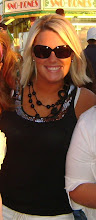
My name is Jami McDonald and I am a senior at Michigan State University. I am majoring in Language Arts and Elementary Education. Diverse literature is something that is very important in the field of education and is something that every child should be exposed to.
When I was a child I was not exposed to much diverse literature. It was just something that we were not taught in school. We had diverse books in our library, but no one really pushed me to read them and explore what they had to offer. Growing up in a predominately white neighborhood, I was not exposed to much diversity. It was not until college, when I was able to see and experience many people of different races and cultures. At first I was very naive to different cultures and didn’t know much about anyone who was different from me. I learned quite a bit through reading various types of literature and meeting people who were able to open me up to new ways of thinking. I think it is very important for children to be exposed to this so they are aware of what else is in the world. Diverse literature helps children to understand different cultures and helps them to understand why some people celebrate certain holidays. I feel this is the best way to get this across to children. They are excited to read and can most easily relate to and understand something they read in a book.
When I was a child I was not exposed to much diverse literature. It was just something that we were not taught in school. We had diverse books in our library, but no one really pushed me to read them and explore what they had to offer. Growing up in a predominately white neighborhood, I was not exposed to much diversity. It was not until college, when I was able to see and experience many people of different races and cultures. At first I was very naive to different cultures and didn’t know much about anyone who was different from me. I learned quite a bit through reading various types of literature and meeting people who were able to open me up to new ways of thinking. I think it is very important for children to be exposed to this so they are aware of what else is in the world. Diverse literature helps children to understand different cultures and helps them to understand why some people celebrate certain holidays. I feel this is the best way to get this across to children. They are excited to read and can most easily relate to and understand something they read in a book.
Subscribe to:
Posts (Atom)